
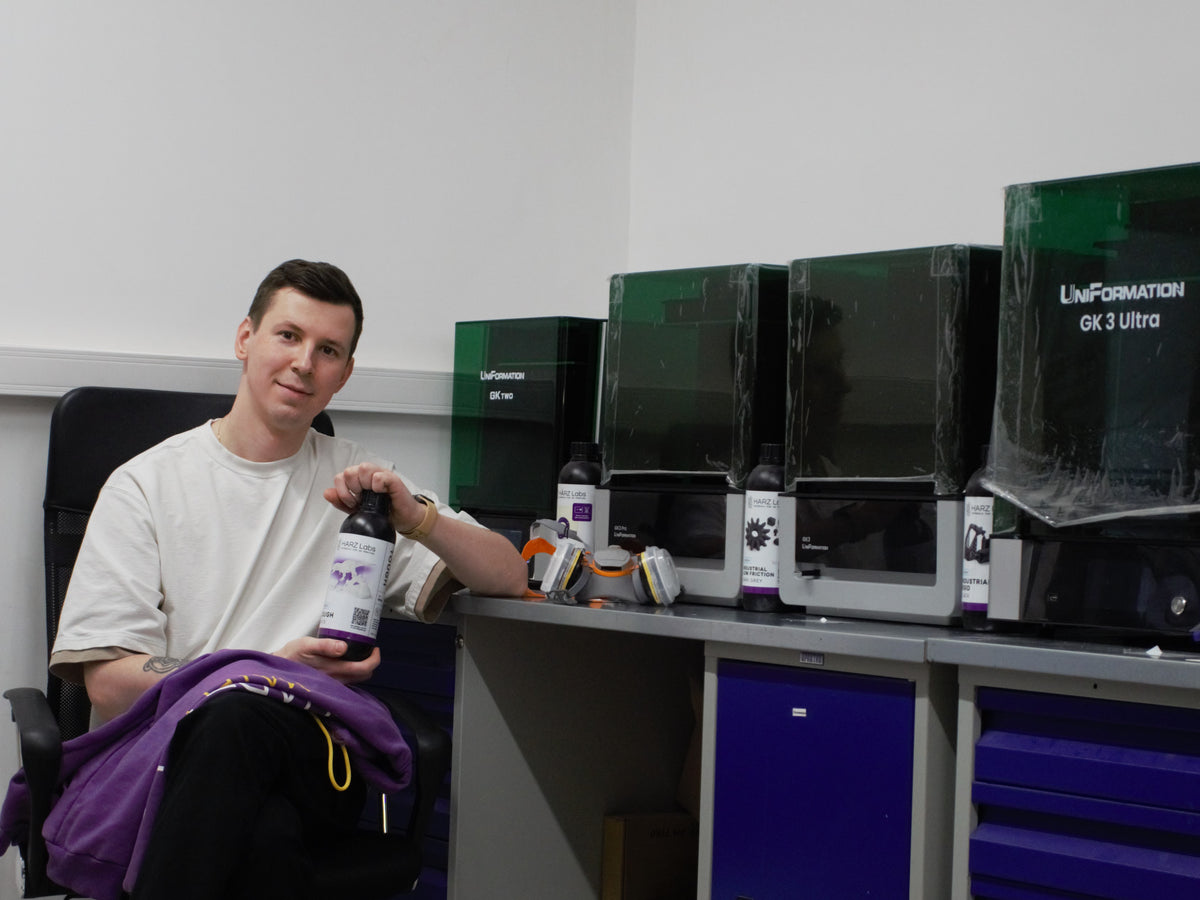
Pavel Sergeev

Pavel, HARZ Labs’ lead R&D and testing expert and now a UniFormation brand ambassador, has long been involved in the development, testing, and market evaluation of medical- and engineering-grade photopolymer resins. His day-to-day work goes beyond validating new material formulations — it also includes evaluating resin performance across a wide range of applications through extensive real-world printing tests. As a result, he has developed a deep understanding of the entire resin 3D printing workflow, from design and printing to post-processing.

He is not only a user of 3D printing equipment, but also a hands-on contributor to material development and manufacturing processes. His perspectives are rooted in real production environments rather than limited prototyping experience, giving his insights particular value in understanding the transition of resin 3D printing from a prototyping tool to a viable solution for low-volume manufacturing.

Beyond Prototypes: How Pavel Brings Desktop Resin Printing into Real-World Workflows

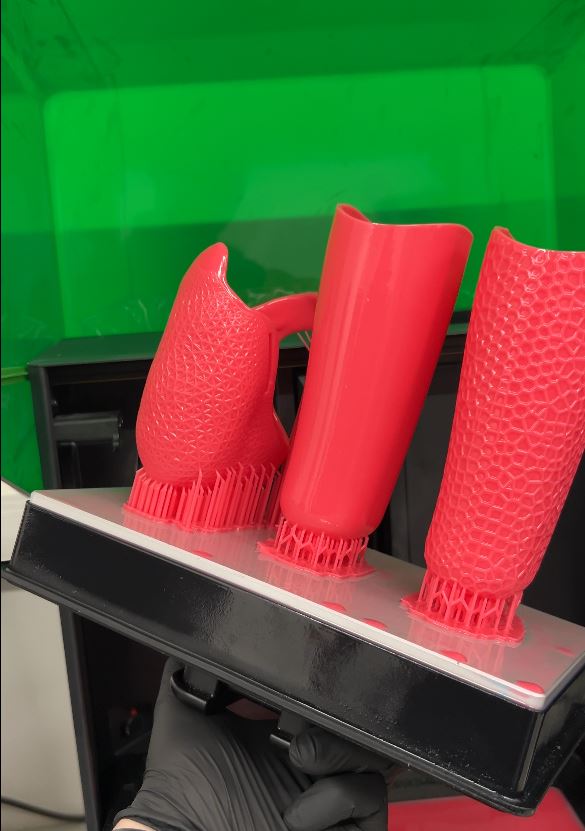
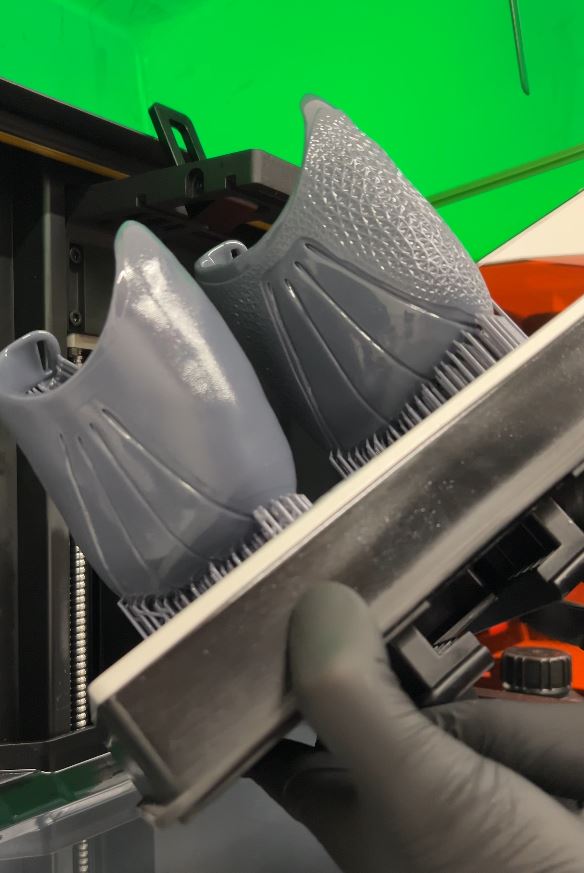
We first came across Pavel through the Spring Print Challenge, where his entry immediately stood out—not because it was flashy or purely artistic, but because it clearly came from a functional mindset. His work didn’t feel like “something printed on a resin printer.” It felt like something designed to do a job. That distinction is important, because Pavel is not just a maker or a competition participant. He works at HARZ Labs, where he is involved in resin development, testing, and real-world validation of materials used in engineering and medical applications. In other words, he spends a lot of time running test prints, comparing failures, and seeing what actually holds up over time.
Resin printed resin mixer


Discover how to effortlessly create high-precision mixers with a resin 3D printer — from design to final production, with complete control every step of the way.

Silicone sealing made with resin 3D printed mold

Using a resin 3D printed mold to create custom silicone sealing parts with high precision and smooth surface quality.

Resin 3D printed parts for car interior


High-precision resin 3D printed components for automotive interiors — combining design flexibility with superior finish.

We sat down with him to talk about how desktop resin printing slowly moved from “just prototyping” into something that now quietly supports real daily work.

When Functional Printing Stops Being Optional

For Pavel, functional printing didn’t start as a creative experiment—it started because they genuinely needed it.

At HARZ Labs, every new resin formulation has to prove itself outside the lab. Technical data alone isn’t enough. Materials need to survive real geometry, real stress, and real environments.

One of Pavel’s earliest functional prints was an automotive air duct component. It wasn’t scanned or reverse-engineered with expensive industrial tools—it was manually measured with calipers, modeled in CAD, and printed using one of their early ABS-like engineering resins.

At the time, the part itself was fairly large—over 200 × 50 × 180 mm. But more importantly, it wasn’t treated like a temporary prototype.

Five years later, the part was still quietly doing its job.

That experience changed the way he looked at resin printing.

“Resin printing is not just for visualization anymore.”

For Pavel, that realization didn’t come from marketing claims or benchmark tests. It came from seeing a printed part continue working year after year in a real environment.

How UniFormation Became Part of a Real Workflow

Pavel first started using UniFormation around 2–2.5 years ago, when a partner brought in a second-generation GK2 system together with washing and curing equipment for compatibility testing.

At first, he wasn’t fully convinced.

The machine used a single linear rail, and from an engineering perspective, that naturally raised questions about rigidity and long-term stability. But once the real testing started, those concerns gradually faded.

What mattered more was how predictable the machine became over time.

Over time, the GK2 stopped feeling like a “test printer” that constantly needed tuning. Instead, it quietly became part of their regular workflow—used for material validation, parameter development, repeated testing, and small production jobs.

One thing Pavel kept coming back to was how easily parameters could transfer between machines. In a testing environment, that matters a lot.

Less recalibration meant fewer failed tests and less wasted material. It also meant spending less time troubleshooting printers and more time actually working on materials.

And maybe the clearest proof is this:

The same GK2 machine is still sitting in their office today, still actively printing after hundreds of hours of use.

Not as a backup machine.
Not as a demo unit.

Just as part of the normal workflow.

For Pavel, that kind of long-term reliability means far more than a specification sheet.

GK3 Series: When Workflow Matters More Than Features

When Pavel started using the third-generation GK systems, the things that stood out weren’t really “bigger” or “faster.”

It was the small things that made daily operation smoother.

Automatic Resin Feeding That Actually Helps

Earlier systems from different manufacturers often left resin sitting in tubes or dripping during maintenance. If you regularly switch materials, that quickly becomes messy and frustrating.

What Pavel liked about the newer GK3 system was simple: it made those changes cleaner and easier to work with day to day. Less dripping, less cleanup, and fewer annoying interruptions during daily work.

Vertical Platform Draining

Another feature Pavel appreciated was the ability to position the build platform vertically so excess resin could naturally drain back down.

It sounds simple, but for someone working around printers every day, small improvements like that matter more than people expect. Less wasted resin. Less cleanup. Less mess on the bench.

These aren’t dramatic “headline features,” but they make a noticeable difference once a printer becomes part of your regular routine.

GK3 Ultra: Not Bigger Parts—Fewer Problems

What Pavel liked most about the GK3 Ultra wasn’t really the idea of “printing huge things.”

It was what the larger build volume helped them avoid.

  • fewer split parts
  • fewer assembly steps
  • less alignment error
  • less post-processing afterward

For one project, the team used the GK3 Ultra to produce several thousand silicone mixing tools.

Producing thousands of parts was impressive on its own. But what mattered more was avoiding endless splitting and reassembly work afterward.

For this kind of work, avoiding extra assembly often matters more than saving a little print time.

When Resin Printing Starts Making More Sense Than Injection Molding

One of the more interesting examples Pavel shared involved small-batch production of silicone mixing spoons.

Normally, something like this would probably go through injection molding. But for this particular project, tooling costs and lead times simply didn’t make much sense.

Instead, the team kept production in-house using resin printing.

That gave them a few practical advantages:

  • no waiting for tooling
  • immediate design changes
  • full control over timing
  • no minimum order quantity pressure

For Pavel, this wasn’t really about “replacing industrial manufacturing.”

It was simply a more flexible way to handle a very specific production problem.

The Reality of 385nm: Advantage, Not Universality

Pavel also shared a pretty balanced perspective on the 385nm light source used in UniFormation’s GK3 Pro system.

In his experience, 385nm can provide clear advantages when working with transparent resins and certain medical or high-precision applications where clarity and detail are especially important.

For people regularly working with transparent materials or specialized technical resins, that makes the GK3 Pro particularly interesting.

But he was equally careful to point out something important:

“Not every resin behaves ideally under 385nm exposure.”

Some resins worked great under 385nm. Others simply worked better under 405nm.

That’s just part of working with real materials.

Where Desktop Resin Printing Is Going Next

Looking ahead, Pavel sees a few clear directions for desktop resin printing.

More automation. Less manual adjustment. Easier day-to-day operation.

He also expects resin printing to continue growing inside smaller workshops and specialized production environments, where flexibility often matters more than large-scale output.

And of course, medical applications will likely continue expanding as personalization and biocompatible materials improve.

But one of his most interesting observations was actually much simpler:

People are already