

Once you’ve got the hang of printing and post-processing models on your own, you might start wondering: what else can I do? Recently, I heard a story from a colleague that really hit me. There’s a guy in Spain who bought a GK3 Ultra, and what started as a personal hobby has turned into a source of income. He can sell 1/6-scale models for €100 to €200 each. By day, he works a regular office job; by night, he prints, assembles, and finishes models to sell. It’s tough work, but what keeps him going is incredible—he’s raising money for his sick child’s medical bills. Honestly, I’m blown away. This is exactly why I wanted to write about this: resin printing can actually make a real difference, 3D printing can be a profitable side hustle or even a full-time business.
Then I reached out to Fabian, the owner of a printing studio, and we had a long night talk. Fabian was very open and enthusiastic about sharing his journey with me.
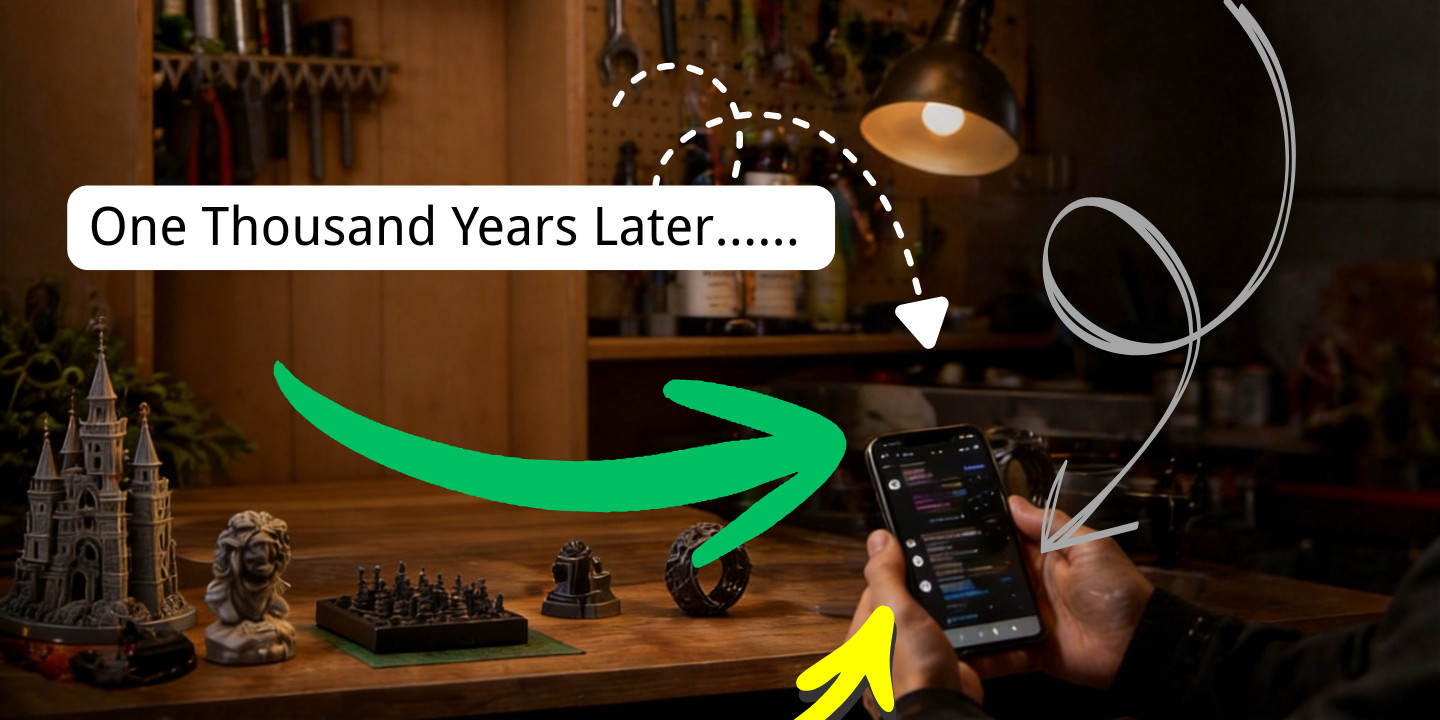
Key of Fabian’s startup experience
Start small, focus on a niche. If you’re just getting into resin 3D printing, Fabian’s top tip is simple but golden: don’t try to please everyone. Beginners often fall into the trap of wanting to do “everything,” which just spreads your time and resources too thin and leads to mediocre results. Pick a niche first, like tabletop game miniatures. These fans are super passionate and care a lot about details, which is exactly where resin printing shines. Once you’ve made a name for yourself there, you can slowly branch out to other kinds of models.
Sell finished products, not just files. If you have strong post-processing skills, selling physical prints can offer much more value than just selling STL files online. Controlling the production process yourself not only ensures quality also allows you to get higher profits.
Go for customization. Custom work is where the real profit lies. Think personalized jewelry, custom miniatures, high-precision cosplay props, or even unique tabletop game accessories, these can bring in high-ticket orders. But let’s be real: customization takes a lot of time. Make sure you’re realistic about how much you can handle before saying yes to orders.
Leverage social media. Post videos of your creations on Instagram, TikTok, and other platforms, showing your models “coming to life” from resin. People love seeing the process, and it’s a great way to showcase your skills while building trust—customers will know they’re getting handcrafted work, not mass-produced items. On top of that, communities on Reddit, Discord, and specialized forums can be super helpful for feedback and promotion.
For beginners starting a resin 3D printing business, balance budget, quality, and safety. Start with a manageable budget, and make sure your pricing covers materials, labor, and electricity so your business can stay sustainable. Next, quality control is key—use high-quality photos to showcase your products since customers can’t touch or inspect them in person. Finally, don’t overlook legal and safety matters, respect intellectual property, and keep your workspace well-ventilated when working with resin to stay healthy and compliant.
What You Need to Start a 3D Printing Business?
To turn your passion into a profitable business, you need a stable and repeatable production system.
While resin printers are at the heart of a 3D printing business, more expensive doesn’t always mean better. You need to choose equipment based on your target market: are you focusing on high-precision prototypes, jewelry, and models, or on industrial parts and small-batch custom items? Different applications have varying requirements for print resolution, resin compatibility, and printing speed.
Photosensitive resin is the core consumable in resin 3D printing. Different types of resin (standard, transparent, high-temperature resistant, flexible) differ significantly in price, storage conditions, and post-processing methods. To operate efficiently, you must understand these materials’ costs and processing requirements in advance, ensuring consistent product quality and sustainable production.
Different models of wash and cure machines vary in processing speed, chamber size, and ease of operation. Before purchasing, you should select the equipment that best matches your expected production volume and product specifications to ensure a smooth workflow and stable, controllable product quality.
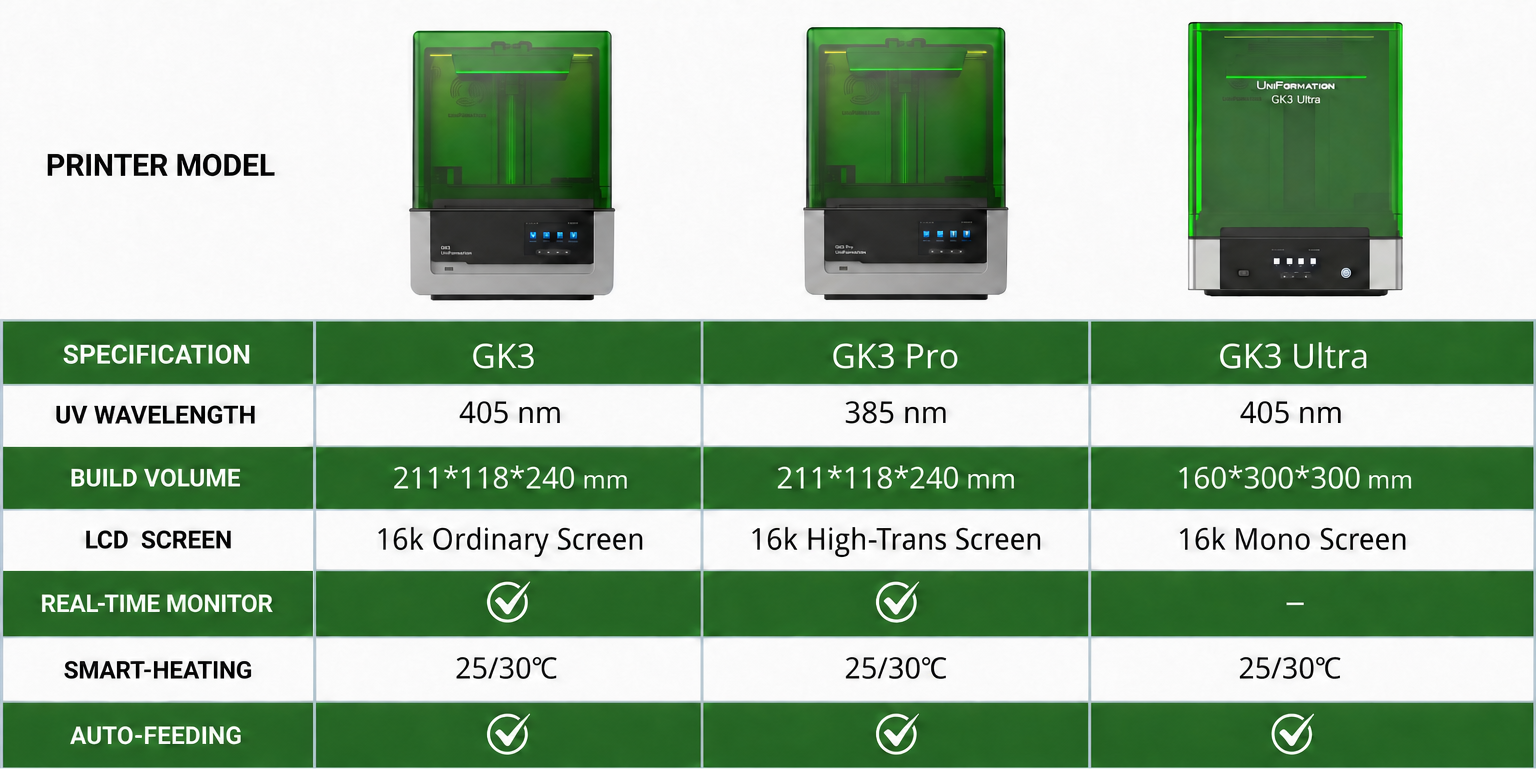
By the way, UniFormation has long been committed to delivering a streamlined, high-efficiency printing workflow, covering printing, washing, and curing in one seamless process. If you’re in the market for a resin printer, the UniFormation GK3 Pro is worth considering. Designed specifically for printing studios, it combines reliability, precision, and ease of use to keep your production running smoothly.
Conclusion
3D printing is no longer just a hobby—it is becoming a viable path to profit. Whether you’re starting with simple functional parts or moving to high-value, personalized products, the key is to identify the right market niche, use the right tools, and establish a repeatable production workflow.
For newcomers, the most important thing is picking a profitable niche, investing in a stable and reliable resin printer, and aiming to complete your first sale as quickly as possible. As you gain experience, you can refine your processes, improve product quality, and gradually expand into higher-revenue areas of the business.


